

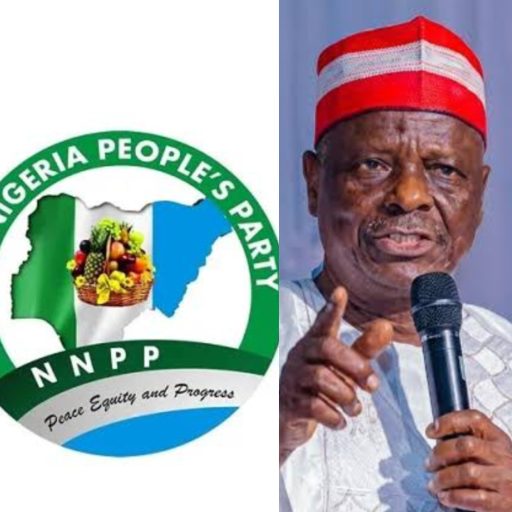
The New Nigeria Peoples Party (NNPP) has dismissed claims by its 2023 presidential candidate, Rabiu Musa Kwankwaso, that his exit from the party was driven by external forces, insisting the move was purely self-inflicted.
Kwankwaso, in a recent statement addressing what he described as “misleading narratives,” had argued that his departure from the NNPP was due to externally influenced legal challenges that made his continued stay untenable. He also compared the situation to the current internal crisis within the African Democratic Congress (ADC), suggesting similar pressures at play.
“We left the NNPP due to externally influenced legal problems that made our stay perilous. The ADC has now also been forced into this difficulty,” he said.
However, reacting swiftly, NNPP founder, Boniface Aniebonam, rejected the claim, asserting that Kwankwaso’s exit stemmed from his alleged attempt to take control of a party he did not establish.
“Kwankwaso has always been his own problem,” Aniebonam said. “His exit, alongside that of Buba Galadima and others, was not influenced externally but by his intense bid to hijack the NNPP.”
Aniebonam further accused Kwankwaso of consistently blaming external forces for challenges of his own making, linking the crisis to internal disputes and leadership struggles within the party.
He also noted that the expulsion of Kwankwaso and his allies had been upheld by the courts, describing allegations of external interference as “baseless and misleading.”
The NNPP founder added that the crisis escalated after Kwankwaso and his supporters allegedly attempted to alter the party’s structure, including its logo, constitution, and leadership framework without the consent of its founding members.
According to him, the Memorandum of Understanding between the NNPP and the Kwankwasiyya Movement was strictly for the 2023 general elections, which provided Kwankwaso a platform to contest the presidency.
Despite finishing fourth in the election behind President Bola Ahmed Tinubu, Atiku Abubakar, and Peter Obi, Aniebonam noted that the NNPP recorded electoral gains in Kano State through the Kwankwasiyya Movement.
He, however, blamed Kwankwaso for failing to manage the party’s success in the state, which he said led to mass defections, including that of Kano State Governor, Abba Kabir Yusuf, to the All Progressives Congress (APC).
Aniebonam maintained that the internal crisis and subsequent legal battles within the NNPP were consequences of Kwankwaso’s actions, not external manipulation.
“It is inappropriate for him to claim external influence over issues that arose from his own conduct,” he said.



Leave a Reply