


foreign operators are gaining ground as lack of training, weak regulation threaten Nigeria’s maritime economy and national security.
By Godfrey Nwosu
The National Association of Government Approved Freight Forwarders (NAGAFF) has raised concerns over what it describes as the gradual decline of indigenous freight forwarders, warning that Nigeria risks losing control of a critical segment of its maritime economy if urgent reforms are not implemented.
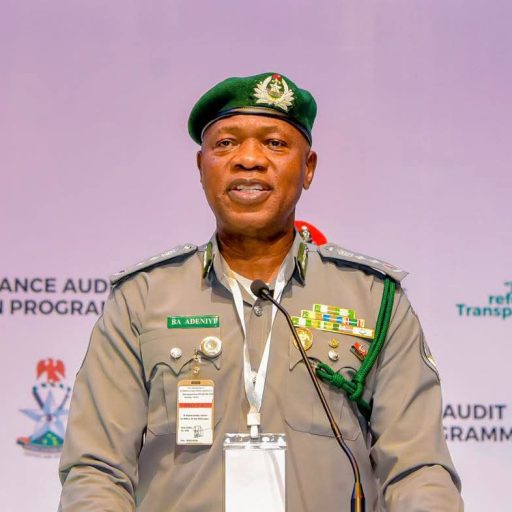
The Secretary General of NAGAFF said that while the Nigeria Customs Service (NCS), under the leadership of Comptroller-General of Customs, Bashir Adewale Adeniyi, continues to modernise its operations through artificial intelligence (AI)-driven trade facilitation and capacity building, indigenous freight forwarders remain inadequately prepared for the future of global trade.
According to the association, the absence of structured training, weak regulatory oversight and poor professional development are creating opportunities for foreign operators to dominate the freight forwarding industry, with potentially far-reaching economic and national security implications.
NAGAFF argued that the Council for the Regulation of Freight Forwarding in Nigeria (CRFFN) has fallen short of its statutory responsibilities under the CRFFN Act 16 of 2007, which mandates the Council to regulate the profession, establish professional standards and provide continuous training for practitioners.
The association noted that despite the rapid digital transformation of the global logistics industry, many indigenous freight forwarders have not received the training required to adapt to AI-powered customs processes, digital trade platforms and evolving international best practices.
It warned that the continued neglect of local operators could result in revenue leakages, reduced competitiveness, declining professional standards and increased dependence on foreign freight forwarding firms.
Beyond the economic consequences, NAGAFF cautioned that allowing foreign interests to dominate the sector could expose Nigeria’s trade ecosystem to strategic vulnerabilities while weakening the country’s local capacity to support Customs in protecting national economic interests.
To reverse the trend, the association called on CRFFN to urgently introduce mandatory professional training and certification programmes, strengthen enforcement of existing regulations and align industry standards with global best practices.
It also advocated deeper collaboration among the Nigeria Customs Service, CRFFN and freight forwarding associations to build local capacity, promote digital skills and prepare practitioners for the future of international trade.
According to NAGAFF, Nigeria’s ambition to build a globally competitive maritime economy can only be achieved if indigenous freight forwarders are equipped with the knowledge, technology and institutional support needed to remain key players in trade facilitation and revenue generation.
The association stressed that safeguarding the future of indigenous freight forwarders is not only a professional necessity but also an economic and national security imperative.






Leave a Reply