

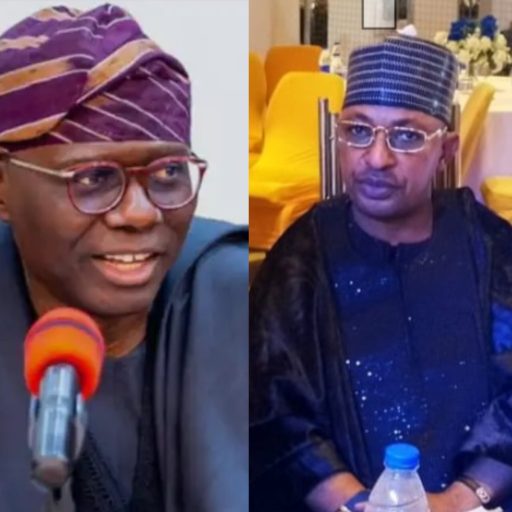
Lagos State Governor, Babajide Sanwo-Olu, has called for the urgent adoption of artificial intelligence (AI), smart mobility systems, digital ticketing, real-time traffic data, and connected infrastructure to address Nigeria’s growing transport challenges and drive sustainable economic growth.
The governor made the call on Wednesday at the Global Transport Policy (GTP) Annual Multimodal Roundtable held in Lagos, with the theme: “Transforming Nigeria’s Transport System: Integrating Solutions for Safety, Efficiency and Sustainability.”
Represented by the Managing Director of the Lagos Metropolitan Area Transport Authority (LAMATA), Mrs. Abimbola Akinajo, Sanwo-Olu said technology-driven transport solutions are no longer exclusive to advanced economies and must be embraced to modernise Nigeria’s transport network.

According to him, countries that will dominate the next phase of global economic competition will be those that combine robust physical infrastructure with intelligent transport systems.
“Nigeria must be in that race,” he said, stressing that the transition to cleaner and greener transportation is no longer optional but a national imperative.
Sanwo-Olu noted that as a coastal megacity, Lagos fully understands the urgency of climate-resilient infrastructure, adding that climate responsibility must become a central component of transport policy nationwide.
He warned that today’s infrastructure investments could become future liabilities without sustainable planning and environmental considerations.
Drawing lessons from history, the governor said every great economy had been built on an efficient transport system, citing the Roman Empire, the Industrial Revolution, and Asia’s economic transformation as examples of how strategic investments in transport infrastructure accelerated development.
“Nigeria has the ambition, the market, and the human capital. What we must now demonstrate is the political will to build transport infrastructure with the coordination, discipline, and sustained investment it requires,” he said.
Also speaking, Director of the Centre for Multimodal Transport Studies at the University of Lagos, Prof. Iyiola Oni, advocated the adoption of digital technologies and called for a comprehensive national transport policy to drive sector-wide reforms.
Chairman of the event, retired Air Commodore Ademola Onitiju, described the roundtable as timely, noting that recent global supply chain disruptions around the Strait of Hormuz underscored the strategic importance of integrated transport systems.
He expressed concern over the fragmentation of Nigeria’s road, rail, air, and water transport networks, saying the lack of integration has resulted in inefficiencies, congestion, poor connectivity, and limited access, particularly in underserved communities.
Onitiju urged stakeholders to strengthen policy coordination, leverage technology, and deepen collaboration to build a safer, more efficient, inclusive, and globally competitive transport system.
He also encouraged participants to adopt global best practices, promote public-private partnerships, and develop practical strategies capable of transforming Nigeria’s transport sector.





Leave a Reply