

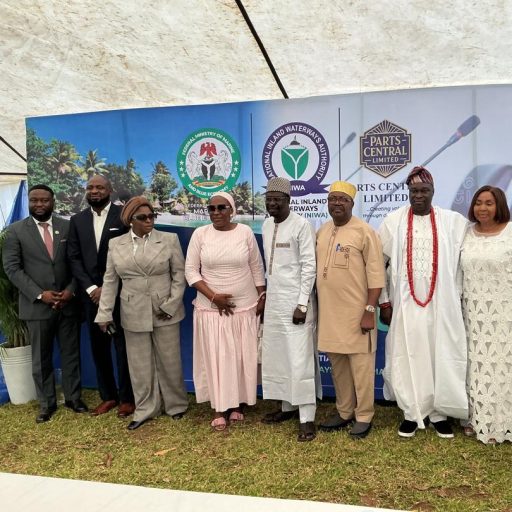
The National Inland Waterways Authority (NIWA) has partnered with indigenous firm, Parts Central Ltd., to tackle pollution across Nigeria’s inland waterways through a long-term waste-management programme designed to make the waterways cleaner, safer and more navigable.
The initiative, unveiled on Tuesday, August 18, 2026, in Lekki Phase 1, Lagos, will introduce structured waste-collection and disposal systems across waterfronts, landing points, jetties and other strategic locations.
The programme is expected to operate for an initial renewable period of 10 years, marking a shift from periodic clean-up exercises to a sustained waste-management framework.
NIWA Lagos Area Manager, Engr. Sarat Braimah, said clean waterways were fundamental to safe navigation, efficient water transportation and the development of Nigeria’s blue economy.
Braimah explained that Lagos was chosen as the starting point because of its extensive water network and the critical role waterways play in transportation, fishing, commerce and livelihoods.
She noted that about one-third of Lagos State is covered by water, making the protection of its waterways essential to the state’s economic and environmental wellbeing.
“Making it work starts from making it clean. If the water is clean, navigation will be easy. If the water is clean, it will create jobs for even our youth,” she said.
Braimah stressed that the success of the initiative would require the active participation of waterfront owners, dredging operators, boat operators and other waterways users.
She urged waterfront owners to provide adequate waste-disposal facilities and called on companies operating around the waterways to properly treat and dispose of their waste.
Waste Bins for Boats, ‘Mother Bins’ at Jetties
Managing Director of Parts Central Ltd., Hon. Henry Olaoluwa Onifade, said the company would deploy a technology-supported waste-management system to ensure that refuse generated on the waterways was collected before it entered the environment.
Under the programme, approved waste bins would be provided for boats and other watercraft, while larger “mother bins” would be stationed at jetties to enable operators to offload waste collected during their journeys.
Onifade appealed to boat operators, waterfront communities and other stakeholders to support the initiative, stressing that sustainable waterways management required collective responsibility.
“Our waterways must not only be clean, they must be safe, productive and sustainable,” he said.
He added that cleaner waterways would promote job creation, tourism and other economic activities while supporting Nigeria’s blue economy ambitions.
Lagos Raises Alarm Over Illegal Dredging
The Lagos State Commissioner for Waterfront Infrastructure Development, Hon. Ekundayo Alebiosu, welcomed the partnership, describing it as an important example of collaboration between the Federal and Lagos State governments.
Alebiosu, however, raised concerns over illegal dredging and its potential impact on aquatic ecosystems and fishing communities.
He warned that indiscriminate dredging could disrupt aquatic life and force fishermen to travel farther in search of fish.
The commissioner also highlighted the dangers posed by illegal infrastructure associated with dredging, including underground pipes and other obstructions that could endanger boats and increase the risk of accidents.
He called for stronger collaboration among government agencies, waterfront communities and waterways operators to address activities threatening the safety and sustainability of Lagos waterways.
Marine Police Link Clean Waterways to Safety
The Marine Police also endorsed the initiative.
Deputy Commissioner of Police U.M. Ogechi, representing the Assistant Inspector-General of Police in charge of Maritime Police, said environmental protection was closely linked to maritime safety and security.
She noted that Nigeria’s economy depended significantly on maritime activities and warned that polluted and obstructed waterways could endanger aquatic life, boat operators and passengers.
According to her, waterways protection should therefore be treated not only as an environmental responsibility but also as a safety and security priority.
Ogechi commended traditional rulers and waterfront communities for providing security information that had supported efforts against piracy and other criminal activities on the waterways.
She urged communities to continue providing credible intelligence to security agencies.
Tourism Operators Demand Cleaner Waterways
President of the National Association of Nigerian Travel Operators (NATOP), Mrs. Bolaji Mustapha, said clean and safe waterways were critical to developing Nigeria’s water-based tourism sector.
Mustapha said the condition of the country’s waterways could influence international visitors’ perception of Nigeria, recalling an incident where a tourist boat became stranded while conveying visitors.
She urged NIWA and Parts Central to intensify public awareness campaigns and ensure that waterfront communities and waterways operators understood their responsibilities in protecting the environment.
Communities Welcome Initiative
The initiative also received support from waterfront communities.
The Odofin of Onisiwo, High Chief Lateef Rufai, welcomed the intervention, noting that refuse dumped into waterways frequently ends up along the shores of neighbouring communities.
He expressed optimism that sustained waste-collection and clean-up operations would improve environmental conditions and the quality of life of residents living around the waterways.
Similarly, the Head of Corporate Communication and Strategy of the Sustainable Waterways Awareness, Advancement and Development Organisation (SWAADO), Chief Raymond Gold, pledged the organisation’s support.
Gold said SWAADO remained committed to promoting safety and sustainability across Nigeria’s waterways.
He added that the organisation’s Nigeria Waterways Directory, which maps waterways infrastructure, operators, jetties and communities, could provide valuable data to support the programme.
From Pollution to Blue Economy Opportunity
Stakeholders at the unveiling agreed that the success of the initiative would depend on sustained cooperation among government agencies, the Lagos State Government, security agencies, waterfront communities, boat operators, tourism operators and other waterways users.
Beyond removing existing refuse, the NIWA-Parts Central partnership seeks to establish a structured culture of waste management by providing waste bins on boats and larger collection points at jetties.
With a renewable 10-year framework, the initiative represents a significant attempt to move Nigeria’s waterways pollution response from occasional clean-up campaigns to a continuous waste-management system.
For Nigeria, cleaner waterways could translate into safer navigation, healthier aquatic ecosystems, stronger tourism, job creation and increased economic utilisation of the country’s inland waterways.
Ultimately, the success of the partnership could help transform polluted waterways into safer and more productive assets capable of supporting Nigeria’s broader blue economy ambitions.




Leave a Reply