

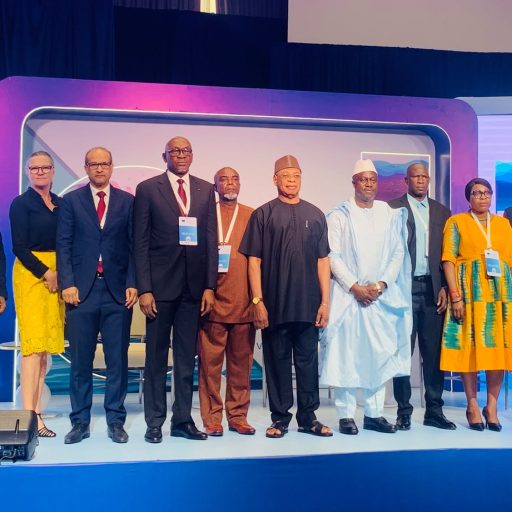
The Secretary-General of the Maritime Organisation of West and Central Africa (MOWCA), Dr. Paul Adalikwu, has called on African countries to move beyond extracting maritime value for foreign interests and take ownership of the continent’s vast ocean resources.
Adalikwu made the call on Thursday, August 13, 2026, while delivering the keynote address, “Setting the Course for Africa’s Maritime Future: From Blue Potential to African Maritime Power,” at the opening of the maiden Blue Africa Conference and Exhibition in Lagos.
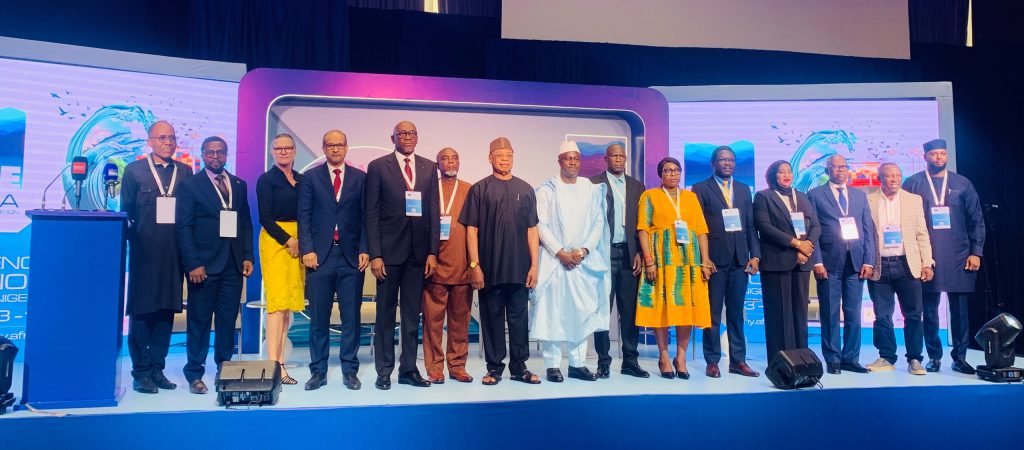
The two-day conference, themed “From Maritime Potential to African Maritime Power,” brings together policymakers, industry leaders, financiers and development partners to explore strategies for transforming Africa’s maritime resources into sustainable economic wealth.
According to Adalikwu, Africa possesses more than 30,000 kilometres of coastline, strategic shipping routes, rich fisheries and significant offshore energy resources, yet much of the value generated from these assets leaves the continent. “Africa generates maritime value but does not retain it. This imbalance must be corrected,” he said.
He identified foreign ownership of ships, dependence on external financing, imported maritime technology and offshore insurance as some of the factors limiting Africa’s ability to fully benefit from its maritime economy.
The MOWCA chief therefore advocated a unified continental maritime strategy, urging African states to move from fragmented national approaches towards stronger regional cooperation.
“One Africa. One maritime voice. One strategic direction,” Adalikwu said, stressing that greater maritime integration would not undermine national sovereignty but strengthen Africa’s collective influence in global maritime affairs.
He called for a five-year action plan capable of delivering measurable progress in maritime integration, urging governments to place maritime development at the centre of their economic strategies.
Adalikwu also challenged African ports to strengthen collaboration rather than compete in isolation, while encouraging the private sector to take greater ownership of the maritime value chain.
A major highlight of his address was the call for the establishment of a Maritime Bank of Africa to mobilise long-term capital for the continent’s maritime development.
He said MOWCA was working towards mobilising patient capital, blended finance, guarantees, equity and long-term debt to support investments in ports, shipping fleets, shipyards, fisheries, offshore renewable energy, maritime technology, security infrastructure and human-capital development.
“No maritime transformation is possible without finance,” he said, arguing that Africa could not build globally competitive maritime industries by relying solely on external capital.
Adalikwu said the continent must shift its focus from simply asking what investment it could attract to determining what it could own, build and scale.
He identified vessels, ports and logistics, maritime technology, fisheries processing, marine data, ship repair, maritime finance and intellectual property as critical areas where African ownership must increase.
The MOWCA Secretary-General also linked Africa’s maritime ambitions to the implementation of the African Continental Free Trade Area (AfCFTA), noting that ports could only achieve their full economic potential when efficiently connected to their hinterlands.
He called for stronger ocean-to-hinterland corridors supported by efficient road, rail, logistics and customs systems to ensure that maritime infrastructure contributes directly to industrialisation and intra-African trade.
On maritime security, Adalikwu said threats including piracy, illegal fishing, trafficking, cyber risks and climate-related vulnerabilities must be addressed through sustained investment.
He noted that a secure maritime environment was essential for attracting investment, expanding trade and protecting jobs and government revenue.
Youths Critical to Africa’s Maritime Future
Adalikwu further identified Africa’s young population as a critical asset in the continent’s maritime transformation.
He called for increased investment in training and capacity development for seafarers, naval architects, port professionals, maritime lawyers, data specialists, cybersecurity experts and maritime entrepreneurs.
According to him, Africa must develop a generation of professionals who are “African in origin, global in competence, and competitive anywhere in the world.”
He challenged participants at the conference to ensure that discussions translate into concrete outcomes, including stronger continental cooperation, support for the proposed Maritime Bank of Africa, a pipeline of bankable maritime projects and a framework for increasing African ownership of the maritime value chain.
Adalikwu said the success of Africa’s maritime transformation would ultimately be determined not by the size of its maritime potential, but by how effectively the continent converts that potential into ownership, wealth and global influence.
“History will judge us not by Africa’s maritime potential, but by what we did with it,” he said.
“The ocean is not a barrier it is Africa’s gateway to the future. But it must be owned, financed and developed by Africans.
“Africa must be an owner. Africa must be a partner. Africa must be a leader. The time to act is now. The future is blue. The future is African.”



Leave a Reply