

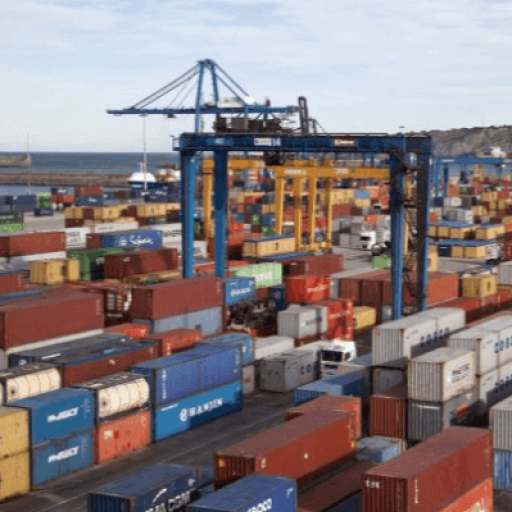
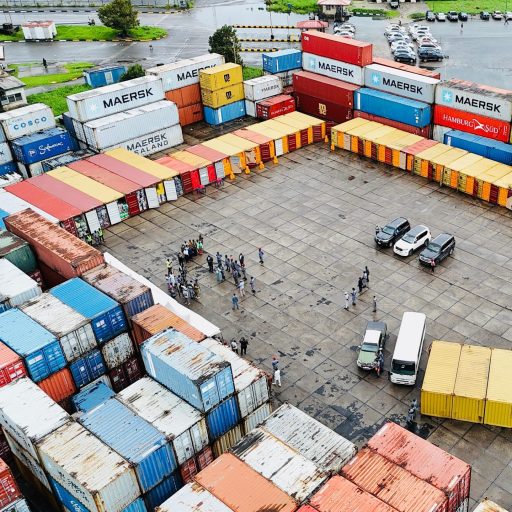
Maritime stakeholders have raised concerns over worsening congestion at the Tin Can Island Port in Lagos, blaming the situation on the growing accumulation of empty containers belonging to Mediterranean Shipping Company (MSC), a development they say is disrupting cargo movement and driving up logistics costs.
The stakeholders, including freight forwarders and truck operators, warned that the congestion is negatively affecting import and export operations, while increasing the financial burden on port users.
Speaking with journalists over the weekend, the National Publicity Secretary of the Association of Nigerian Licensed Customs Agents (ANLCA), Mr Emmanuel Onyeme, attributed the crisis to what he described as an imbalance in MSC’s container evacuation operations.
According to Onyeme, MSC vessels regularly discharge large volumes of containers at the port but evacuate significantly fewer containers on outbound voyages, resulting in a persistent build-up of empty containers across terminals.
He disclosed that major facilities within the Tin Can Port complex, including TICT Terminal, Ports and Cargo Handling Services, and Five Star Logistics Terminal, have reportedly stopped accepting MSC empty containers due to a shortage of storage space.
“The situation has become critical. Empty containers are piling up daily, making it difficult for operators to return boxes and complete cargo transactions efficiently,” Onyeme said.
He noted that the congestion has also impacted export activities, with some export-bound goods reportedly trapped in MSC containers because of difficulties associated with container returns.
The ANLCA spokesperson further revealed that haulage costs within the port corridor have risen sharply as a result of the congestion. According to him, moving containers within the Tin Can Port complex now costs as much as N500,000, while transportation to inland destinations such as Ikeja attracts charges of up to N1.5 million.
Onyeme added that many transporters are increasingly unwilling to handle MSC containers due to prolonged delays, mounting storage charges and poor turnaround times.
He also alleged that the backlog is contributing to traffic congestion around the port access roads, as trucks struggle to secure loading and offloading spaces.
While MSC reportedly directs operators to return empty containers to its designated depot, MEDLOG, Onyeme claimed that stakeholders have complained about inadequate or unavailable space at the facility.
The ANLCA official further alleged that some security personnel stationed at the Nigerian Ports Authority gate were exploiting the situation by demanding unofficial payments from truck operators seeking access to discharge containers.
Meanwhile, the association has rejected any proposed increase in shipping charges, insisting that shipping companies must first address operational inefficiencies and invest in infrastructure before seeking tariff adjustments.
Also speaking on the development, the Secretary of ANLCA Tin Can Chapter, Mr Franky Paul Nwegbe, disclosed that the association was preparing a formal petition to the Nigerian Shippers’ Council over the matter.
Nwegbe warned that the continued congestion could further undermine terminal productivity and export operations if urgent steps are not taken to resolve the situation.
Similarly, the Association of Maritime Truck Owners expressed concern over the growing backlog.
Its National Secretary, Comrade Muhammed Bala Sanni, said truck operators were increasingly avoiding MSC container transactions to protect themselves from delays and financial losses.
He attributed the problem largely to the lack of adequate holding bays for empty containers, noting that prolonged truck turnaround times were eroding operators’ revenues and increasing operational costs.
Stakeholders have called on the Nigerian Shippers’ Council and other relevant authorities to intervene urgently to restore operational efficiency and prevent further disruption to activities at one of the country’s busiest seaports.
MSC Container Chaos: Tin Can Operators Seek Shippers’ Council Intervention










Leave a Reply