


The President ,Chartered Institute of Logistics & Transport Boboye Oyeyemi has called for an end-to-end transformation of Nigeria’s logistics system, stressing that port modernisation alone cannot guarantee competitiveness.
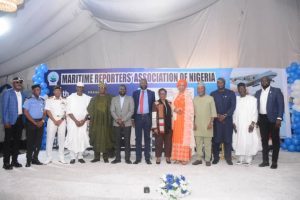
Speaking at the MARAN Maritime Annual Lecture (MAMAL) 2026, held in Lagos, Boboye said Nigeria must look beyond the terminal to the entire cargo journey from the point of production to the international market.
He noted that the real competitiveness of the country’s ports would be determined by how quickly cargoes are cleared, evacuated and delivered to factories, warehouses, markets and consumers at predictable costs.

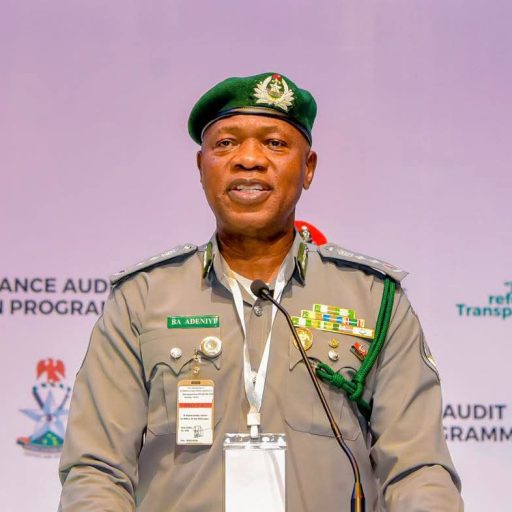
President Chartered Institute of Logistics & Transport Dr Boboye Oyeyemi at the Maran Maritime Annual Lecture 2026 in Lagos.
According to him, questions around port efficiency must include whether cargo can clear Customs without unnecessary delays, move seamlessly by road, rail or inland waterways, and reach its destination competitively.
He said Nigeria’s growing cargo throughput, expanding container traffic and the emergence of the Lekki Deep Sea Port were positive developments, but warned that “a fast-growing port does not automatically create competitiveness.”
Boboye explained that a modern terminal would not necessarily translate into a modern logistics system if it remained connected to fragmented government processes and expensive inland transportation.
He therefore urged stakeholders to stop treating ports as isolated facilities and begin viewing them as critical nodes within an integrated national logistics network.
Such a network, he said, must connect ports seamlessly with Customs, roads, railways, inland waterways, dry ports, warehouses, industrial clusters, markets and global customers.
Digital Integration, Transparent Charges
Boboye also highlighted the importance of digital platforms, including the National Single Window and port community systems, in creating an integrated cargo-flow ecosystem.
He said the objective should not merely be to upload existing data online but to ensure that government agencies and private operators can access relevant information without repeatedly requesting the same documents from importers and exporters.
“The container should have one digital identity and one traceable journey. That is the future,” he said.
On port charges, Boboye said the competitiveness debate should not focus solely on whether a particular tariff is high or low, noting that importers and exporters ultimately bear the total cost of moving cargo from origin to destination.
He listed port and terminal charges, Customs-related costs, storage, demurrage, documentation, haulage, security, inventory expenses and uncertainty as components of the overall logistics cost.
He consequently called for policies aimed at reducing the total cost of cargo movement through transparent and predictable charges, efficient processes and measurable service standards.
Call for Multimodal Transport System
The transport expert further advocated a stronger multimodal transport system, stressing that Nigeria could not continue to depend overwhelmingly on roads for cargo evacuation.
He said rail transport should be prioritised for high-volume and long-distance cargo, while inland waterways should be developed where commercially viable.
Dry ports and logistics parks, he added, could also bring cargo processing closer to the hinterland and reduce pressure on seaports.
Boboye said transport and logistics professionals had a responsibility to promote collaboration across maritime transport, roads, rail, aviation, warehousing, technology, infrastructure and trade facilitation.
He noted that logistics professionals must begin to think in terms of the entire supply chain rather than individual modes of transportation.
According to him, Nigeria’s population, geographical position, maritime assets and access to the African Continental Free Trade Area provide the country with the opportunity to become a major logistics gateway for West and Central Africa.
He called for a transition “from port modernisation to logistics transformation, from terminals to networks, from documents to data, from dependence to multimodality, and from import bias to export competitiveness.”
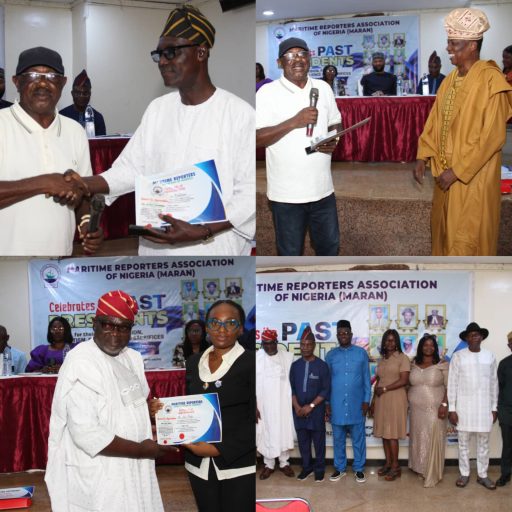
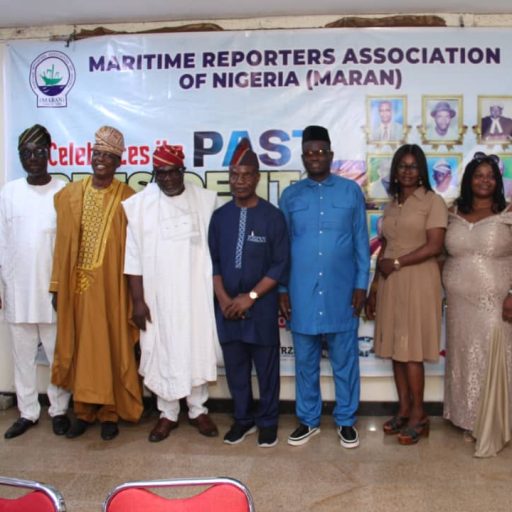
Boboye commended MARAN for sustaining platforms that promote informed national conversations on the maritime sector.
He also urged the media to go beyond reporting port activities by helping the public understand how logistics affect the prices of goods, business competitiveness, employment, investment and economic growth.
“Modern ports do not merely move ships faster; they should help move the Nigerian economy forward,” he said.








Leave a Reply