

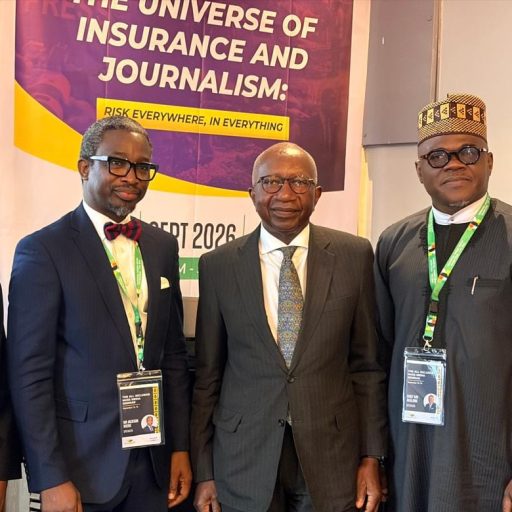
Poor public awareness, limited insurance literacy and inadequate media coverage are undermining confidence in Nigeria’s insurance industry, experts have said.
The experts spoke at a media training programme titled “The Universe of Insurance and Journalism: Risk Everywhere, in Everything,” where they urged journalists to deepen insurance reporting and help Nigerians understand how insurance can protect lives, property and livelihoods.
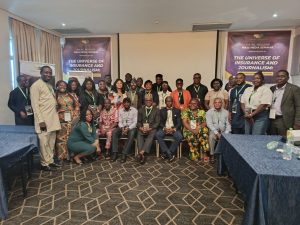
Speaking on “Bridging the Information Gaps and Financial Adversities,” a lecturer and former Head of the Department of Mass Communication at the University of Lagos, Professor Adepoju Tejumaiye, said the media had a critical role in shaping public understanding of insurance and risk.
Tejumaiye urged journalists to become “risk interpreters” by reporting not only disasters but also their financial consequences and the role insurance could play in reducing losses. He identified low awareness, mistrust, complex insurance language, poor claims experiences, weak enforcement of compulsory insurance laws and socio-economic challenges as major barriers to insurance uptake.
He called for specialised insurance desks, analytical reports, features, documentaries and social media content, urging the media to move from “event framing to risk framing.”
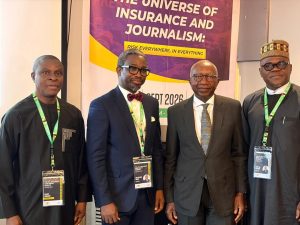
Also speaking, Senior Advocate of Nigeria, Dr Omogbai Omo-Eboh, said insurance provided a mechanism for sharing and managing the financial consequences of uncertain events.
Addressing the “Legal and Integrative Framework for National Insurance Policy: How to Make Insurance Work for the Individual, Government and the Economy,” Omo-Eboh urged government to lead by example by insuring its assets, infrastructure and employees.
He said effective implementation and enforcement would be critical to the success of insurance reforms and expanded compulsory insurance requirements. He also advocated linking insurance compliance to licences, permits, registration and public procurement, noting that technology could simplify verification and reduce fraud.
Omo-Eboh challenged journalists to investigate delayed claims, misleading practices and failures to comply with compulsory insurance requirements, rather than reporting disasters without examining their insurance implications.
Similarly, the Lead Editor of an insurance publication, Mr Ifeanyi Uzoma, said insurance was relevant to virtually every area of journalism because risk was present in business, governance and everyday life.
Uzoma urged journalists covering road crashes, building collapses, fires and other major incidents to ask whether affected persons or assets were insured and examine the implications.
The experts called for sustained collaboration among the media, regulators, insurers, government and consumers to close the insurance information gap and improve public confidence in the sector.






Leave a Reply