


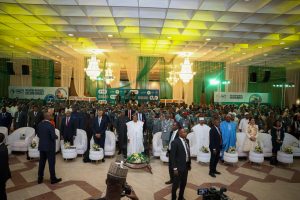
President Bola Ahmed Tinubu on Monday, November 17, 2025, urged African nations to break down inefficient borders, overhaul their Customs systems and commit to a unified trade framework capable of reshaping the continent’s economic future.
Declaring open the maiden Customs Partnership for African Cooperation in Trade (C-PACT) Summit at the State House, Abuja, the President—represented by Vice President Kashim Shettima—said Africa’s prosperity rests on bold reforms that transform its vast market and population into a truly competitive economic bloc.
Shettima stressed that the continent must shift from fragmented markets to coordinated policies backed by political will, institutional alignment and technology-driven trade systems. He noted that Nigeria’s ongoing reforms—including exchange rate unification, fuel subsidy removal, port modernisation and advanced Customs digitalisation—are designed to attract investment and position the nation as a key force in continental trade.
He disclosed that Nigeria’s National Single Window, set for launch in March 2026, will reduce cargo clearance timelines from 21 days to under seven, aligning the country with AfCFTA’s digital trade benchmarks and strengthening its role in port automation across Africa.
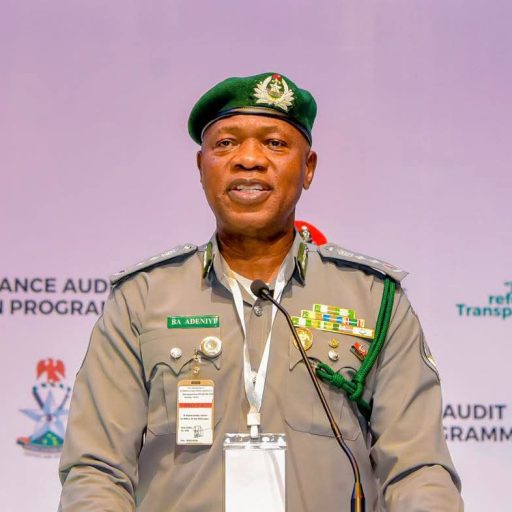
Comptroller-General of Customs, Adewale Adeniyi, said his mandate extension by President Tinubu includes performance indicators tied directly to AfCFTA implementation. He stated that the Nigeria Customs Service has intensified engagements with Customs administrations across Africa to ensure that Customs plays a central role in enforcing rules of origin, administering preferential duties and driving trade preference reforms.
Adeniyi pointed to lessons from previous regional integration efforts, especially the ECOWAS Trade Liberalisation Scheme, which faltered due to inconsistent implementation. He emphasised that AfCFTA must avoid similar pitfalls, noting that African economies vary in readiness but have now reached consensus that Customs must sit at the heart of the agreement’s execution.
He added that sustained advocacy for Customs inclusion in continental structures led to the creation of C-PACT—a platform to strengthen partnerships among African Customs administrations, the private sector, regulators and international development institutions.
The CGC revealed that Nigeria’s export volume has grown by over 30 percent in two years, with efforts now focused on expanding access to African markets where opportunities for growth are more significant.
He also confirmed the attendance of 30 African Customs administrations at the conference, including 22 heads of Customs, and noted that—for the first time—the Secretary-General of the World Customs Organisation (WCO) is participating in a Nigeria-hosted Customs event.
Representing the Minister of Finance, Minister of State Doris Anite described Customs reforms as central to Nigeria’s fiscal transition, saying efficient border operations improve investor confidence and boost global competitiveness. She reaffirmed government support for full digitisation, enhanced risk management and alignment with international standards.
Minister of Trade, Investment and Industry, Jumoke Oduwole, warned that despite AfCFTA’s potential, outdated systems still impede progress. She noted ongoing reforms with the Nigeria Customs Service, including tariff concession schedules and the establishment of a dedicated air-cargo export corridor to East and Southern Africa.
WCO Secretary-General Ian Saunders said Africa’s positive economic outlook depends heavily on Customs efficiency, adding that C-PACT aligns with the WCO’s mission to support global Customs operations through standards, training and operational guidance. Quoting a WCO motto “Borders divide; Customs connects” he stressed that Africa must strengthen Customs integration to unlock its full trade potential.
AfreximBank’s Executive Vice President for Intra-African Trade, Kanayo Awani, outlined ongoing support for Customs modernisation, including digital tracking systems, transit-bond guarantees and the AfCFTA Adjustment Fund designed to mitigate revenue losses from tariff liberalisation.
AfCFTA Secretary-General Wamkele Mene commended Nigeria’s leadership and Adeniyi’s role as Chair of the WCO Council, stating that Customs must drive the implementation of AfCFTA annexes on trade facilitation, transit and Customs cooperation. He said Africa is relying on coordinated Customs action to lower trade costs, eliminate bureaucracy and safeguard market access for African products.



Leave a Reply