

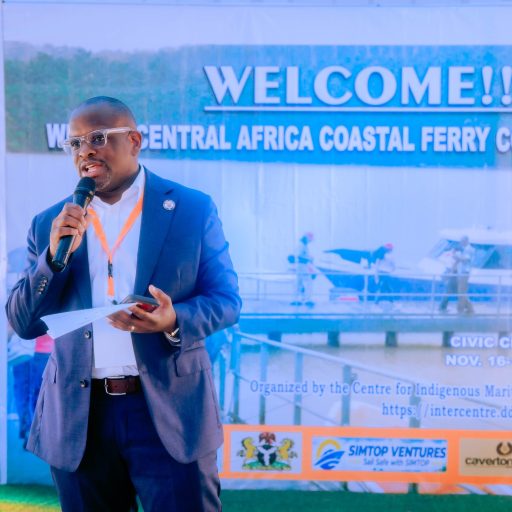

Stakeholders at the inaugural West and Central Africa Ferry Conference and Exhibition 2026 have called for increased investment, stronger regulatory frameworks and improved maritime infrastructure to unlock the potential of regional coastal ferry transportation and boost cross-border trade.
The call was made at the conference, held at the Civic Centre, Victoria Island, Lagos, under the theme, “Connecting Nations, Empowering Trade,” with the focus, “From Dakar to Luanda: New Trade Routes.”
Speaking at the event, Dr Edmund Chilaka, Visiting Research Fellow at Liverpool John Moores University and Adjunct Lecturer at the University of Lagos, stressed the urgent need for alternative transportation systems to address the growing challenges facing road transportation across West and Central Africa.
Chilaka cited the reported daily queue of more than 500 articulated trucks at the Badagry-Seme border as evidence of the pressure on existing road transport infrastructure, arguing that coastal ferry services could provide a more efficient, safer and potentially cost-effective alternative for moving passengers and cargo across neighbouring countries.
He disclosed that major manufacturers and traders, including Innoson Motors and Dangote Group, had raised concerns over the difficulties of transporting goods across the region.
According to him, the demand for coastal ferry operations already exists, but inadequate vessel capacity remains a major obstacle to meeting the market’s needs.
“The market is ready, there are cargos to be shipped, but there are no ferries,” he said.
He therefore urged existing operators to expand their fleets while calling on government and relevant regulatory agencies, particularly the Nigerian Maritime Administration and Safety Agency (NIMASA), to create an enabling environment that would attract private investment and support the growth of ferry operations.
Also speaking, the Special Adviser to the Lagos State Governor on Blue Economy and General Manager of the Lagos State Waterways Authority (LASWA), Mr Oluwadamilola Emmanuel, emphasised that regional ferry transportation could only thrive with adequate infrastructure, effective security arrangements and strict safety standards.
He cautioned that deploying vessels without properly dredged waterways, functional terminals, reliable security systems and other essential facilities could undermine operational safety and the sustainability of ferry services.
Emmanuel highlighted Lagos State’s initiatives to strengthen waterways management through technology, infrastructure development and collaboration with other states.
He disclosed that the state had established a water-wave monitoring and data management centre, equipped with artificial intelligence-supported control room operations and predictive models for mapping proposed ferry trips.
He also identified the introduction of West Africa’s first electric ferry and the ongoing €410 million Omi Eko Integrated Mass Transit Project as major steps towards sustainable water transportation.
According to him, the Omi Eko project will cover approximately 15 ferry routes spanning 140 kilometres, upgrade or construct 25 terminals and jetties, and introduce 78 electric-powered vessels.
He stressed that expanding ferry transportation beyond national and state boundaries would require coordinated planning and implementation, noting that no single state could independently achieve the level of regional connectivity required.
In his remarks, the Conference Chairman, Professor David Aworawo of the Department of History and Strategic Studies, University of Lagos, described coastal ferry transportation as a strategic opportunity for accelerating economic growth and facilitating the movement of people and goods across West and Central Africa.
He noted that persistent road congestion, high transportation costs and other logistical challenges had made it imperative for countries in the region to maximise their coastal geography and maritime resources.
“If water transportation in this corridor is well developed, it will contribute to the development of West and Central Africa. Businesses will expand and goods will move freely,” Aworawo stated.
He explained that the conference was designed to bring together maritime practitioners, academics, policymakers and other industry stakeholders to exchange ideas, examine operational challenges and develop practical strategies for sustainable coastal ferry services.
He further stressed the importance of understanding route economics, prevailing business conditions and operational requirements to ensure that ferry operations remain commercially viable.
Delivering the keynote address, Capt. Ade Olopoenia drew attention to persistent congestion at motor parks across West Africa, describing it as an indication of the growing demand for regional transportation.
He observed that travellers and small-scale traders continued to face poor road conditions, extortion and prolonged border delays due to the limited availability of safe and reliable maritime transportation alternatives.
The conference also highlighted the African Continental Free Trade Area (AfCFTA), which provides access to a continental market of approximately 1.3 billion people, as a major opportunity for expanding regional maritime connectivity.
Stakeholders maintained that developing reliable ferry connections along the Dakar-Luanda coastal corridor would strengthen trade relations, improve logistics, facilitate cross-border commerce and provide manufacturers, traders and passengers with viable alternatives to road transportation.
The conference ended with a renewed call for stronger partnerships among governments, maritime regulators, private investors and industry operators to bridge infrastructure gaps, harmonise regulatory frameworks and translate the region’s maritime potential into functional and commercially sustainable ferry services.


Leave a Reply