

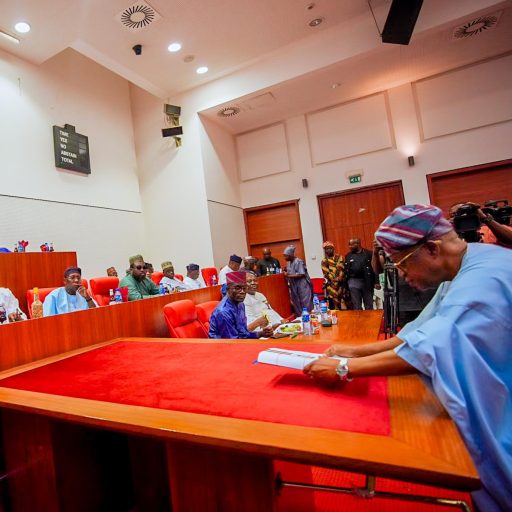
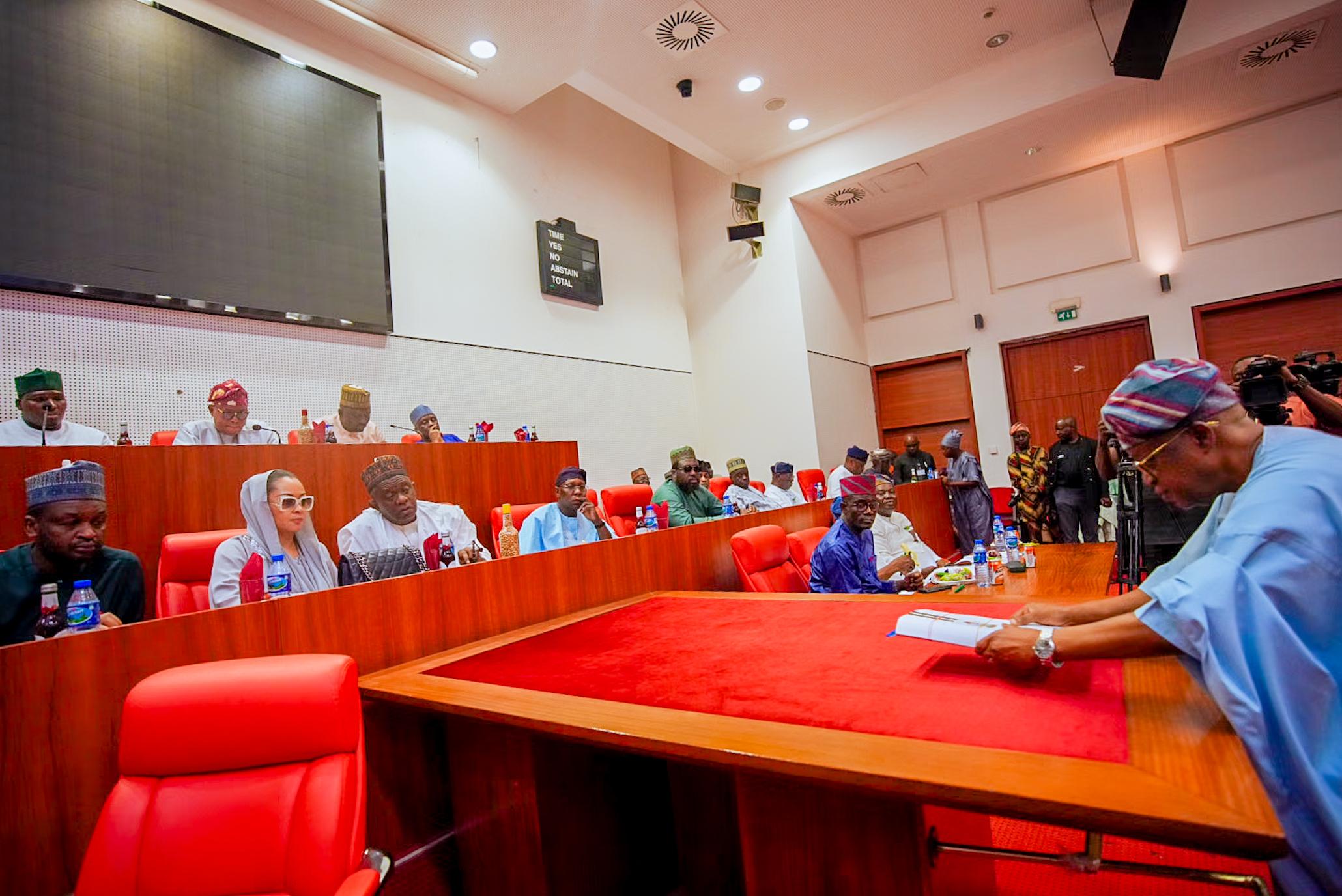
The Minister of Marine and Blue Economy, Dr. Adegboyega Oyetola, on Tuesday presented a ₦10.5 billion budget proposal for the ministry’s 2026 fiscal year, warning that the allocation is grossly inadequate to drive reforms and unlock the sector’s full economic potential.
Defending the proposal before a joint session of the Senate Committee on Marine Transport and relevant House of Representatives committees, Oyetola said the proposed ₦10,499,984,667.10 would barely sustain basic operations rather than deliver transformative growth across the maritime sector.
The breakdown of the proposal shows ₦8.24 billion earmarked for capital projects, ₦453.86 million for overhead costs and ₦1.81 billion for personnel expenses.
According to the minister, the ministry supervises critical and interconnected subsectors ports, shipping, inland waterways, fisheries and aquaculture which account for over 90 per cent of Nigeria’s international trade by volume and play a central role in food security and economic competitiveness.
He, however, raised concerns over what he described as excessive deductions at source by the Office of the Accountant-General of the Federation from revenues generated by key maritime agencies such as the Nigerian Ports Authority (NPA), the Nigerian Maritime Administration and Safety Agency (NIMASA) and the Nigerian Shippers’ Council (NSC).
Although the agencies are self-funding and remit substantial revenues to the Consolidated Revenue Fund, Oyetola said the deductions have weakened their liquidity and operational flexibility, with consequences including port congestion, rising logistics costs, delayed cargo clearance, revenue losses and inflationary pressures.
“What appears to be an accounting issue has become a national economic concern,” he said.
The minister also flagged an administrative anomaly in the 2026 budget, noting that the Council for the Regulation of Freight Forwarding in Nigeria (CRFFN) was erroneously listed under the Federal Ministry of Transportation by the Budget Office, despite being an agency of the Marine and Blue Economy Ministry. He said the misalignment undermines oversight clarity and policy coordination within the maritime logistics value chain.
On inland waterways, Oyetola called for increased funding to improve safety and reduce accidents, stressing that water transport is significantly cheaper and more efficient than road haulage. He noted that over 80 per cent of Nigeria’s freight currently moves by road, contributing to road deterioration and higher transport costs. Strengthening inland waterways, he argued, would ease pressure on highways and lower the cost of goods nationwide.
Addressing fisheries and aquaculture, the minister said Nigeria’s annual fish demand of over 3.6 million metric tonnes far exceeds domestic production of about 1.4 million metric tonnes, forcing imports valued at more than $1 billion yearly. He added that post-harvest losses of up to 30 per cent further strain supply, despite fish being one of the most affordable sources of animal protein. He assured lawmakers that the ministry is intensifying efforts to boost local production and cut imports.
Oyetola further disclosed that the ministry’s 2025 revised capital budget of ₦3.53 billion recorded an actual cash release of only ₦202.47 million — about 1.7 per cent — while overhead releases stood at 35 per cent, underscoring persistent funding challenges.
He said discussions are ongoing with the Ministry of Budget and Economic Planning to address the funding gaps in line with the Federal Government’s economic diversification agenda through the marine and blue economy.
In his remarks, Chairman of the Senate Committee on Marine Transport, Senator Wasiu Eshilokun, assured that the National Assembly would give due consideration to the proposal, acknowledging the strategic importance of the marine and blue economy to national development and economic resilience.




Leave a Reply