

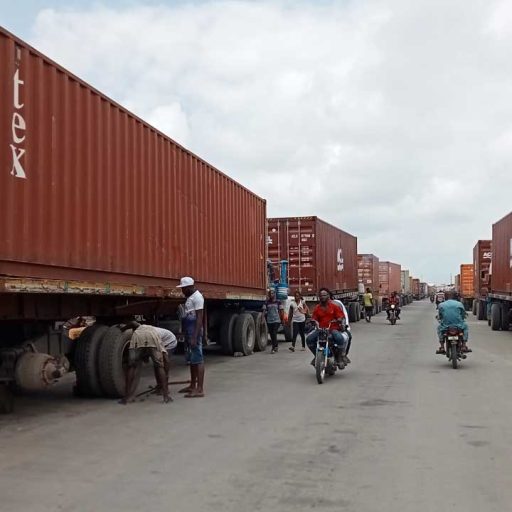
The National President of the Association of Maritime Truck Owners (AMATO), Chief Remi Ogungbemi, has called for stronger public-private sector collaboration and technology-driven solutions to address persistent traffic congestion and improve operational efficiency at the Apapa and Tin Can Island Ports in Lagos.
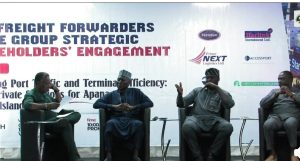
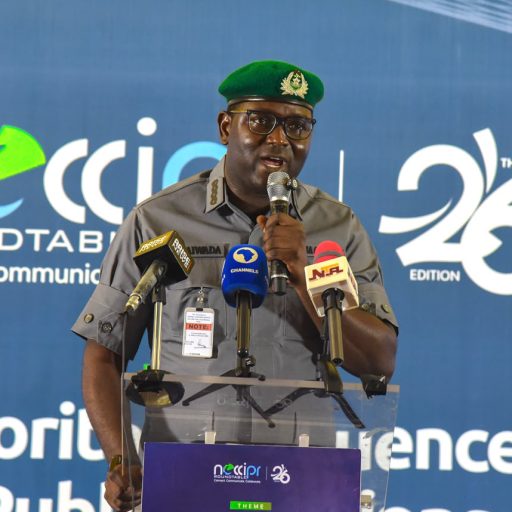
Ogungbemi made the call while delivering a keynote address at the Lagos Chamber of Commerce and Industry (LCCI) Freight Forwarders Trade Group Strategic Stakeholders’ Engagement held on Tuesday, October 27, 2026.
Speaking on the theme, “Optimising Port Traffic and Terminal Efficiency: Public-Private Solutions for Apapa and Tin Can Island Ports,” the AMATO president said port congestion goes beyond inadequate road infrastructure and excessive truck numbers, noting that poor coordination of truck staging, terminal scheduling, empty-container returns and port access procedures are major contributors to the problem.
He stressed the need for a transparent, technology-driven and accountable port logistics system with clearly defined responsibilities for all stakeholders across the maritime value chain.
Ogungbemi advocated a strengthened, manifest-based truck call-up system that would verify truck identities, confirm their presence at approved parks, establish queue positions and regulate movement based on terminal readiness.
According to him, the Nigerian Ports Authority (NPA) must strengthen its supervisory role by establishing operational standards, enforcing compliance and ensuring effective integration between truck call-up platforms and port gate systems.
He also urged Truck Transit Park (TTP) operators to maintain an auditable electronic platform capable of tracking truck verification, queue positions, release times, destinations and movement authorisations.
The AMATO president further called on terminal operators to provide timely and accurate information on cargo readiness and receiving capacity, while shipping companies, freight forwarders, importers and exporters should improve cargo information and delivery coordination.
On the management of port traffic, Ogungbemi warned against releasing trucks without considering the receiving capacity of terminals, explaining that such practices merely transfer congestion from designated parks to port access roads, bridges and adjoining corridors.
He proposed a batch-release system that aligns truck movements with the actual capacity of terminals to receive vehicles within specified periods.
He also recommended the adoption of electronic truck e-tags and integrated movement manifests to strengthen truck identification, improve call-up verification and prevent unauthorised access to port facilities.
Addressing the challenges associated with empty-container returns, Ogungbemi said delays in returning empty containers increase truck operating costs, reduce vehicle availability and worsen traffic congestion.
He called for stronger electronic coordination among TTP operators, shipping companies, terminal operators and bonded terminals to ensure that designated receiving locations and available capacities are confirmed before trucks are dispatched.
The AMATO president also expressed concern over the impact of inefficient port operations on compliant truck owners, noting that prolonged delays result in idle vehicles, additional operational expenses, lost contracts and reputational damage.
He called for a transparent complaints and review mechanism to address queue disputes, unexplained delays and system failures, insisting that operators who comply with approved procedures should not be disadvantaged by those who circumvent the rules.
As part of efforts to translate discussions into practical results, Ogungbemi proposed the establishment of a joint Port Traffic and Terminal Efficiency Working Group, coordinated by the NPA and involving relevant government agencies, TTP operators, terminal operators, shipping companies, bonded terminals, freight forwarders and recognised transport associations.
He said the proposed working group should monitor key performance indicators, including truck registration and verification, authorised vehicle releases, terminal admission rates, waiting times, cargo evacuation performance, empty-container return delays and reported operational irregularities.
He further emphasised the need to assign clear responsibilities, corrective measures and implementation timelines to identified challenges, with regular reviews based on verifiable electronic records and measurable performance indicators.
Ogungbemi maintained that resolving congestion at Apapa and Tin Can Island Ports requires coordinated action across cargo readiness, truck staging, call-up authorisation, terminal capacity, empty-container returns and port gate operations.
He reaffirmed AMATO’s readiness to collaborate with relevant stakeholders in implementing practical solutions that would reduce delays, lower logistics costs, protect compliant operators and improve cargo evacuation.
He urged stakeholders to move beyond repeated discussions and embrace coordinated implementation, stressing that efficient port operations are critical to trade facilitation, investment and Nigeria’s economic growth.







Leave a Reply