


Amina Ojelabi
Nigeria’s long-awaited National Single Window (NSW) initiative could fall short of expectations if underlying institutional and infrastructural challenges in the country’s port system are not addressed, a maritime policy expert has warned.
Speaking at a roundtable organised by the Maritime Reporters Association of Nigeria in Apapa, Lagos, Dr. Segun Alade Musa offered a critical assessment of the Federal Government’s push to implement the digital trade facilitation platform.
Dr. Musa, Chief Consultant at Global Transport Policy, described the National Single Window as “an ordinary shell to house agencies,” cautioning that technology alone cannot resolve systemic inefficiencies in Nigeria’s port operations.
According to him, expectations that the digital platform will automatically accelerate cargo clearance and eliminate port bottlenecks may prove unrealistic unless deeper institutional reforms are undertaken.
“Bringing agencies together under the NSW is not the solution,” Musa said. “Interactions may become faster, but without the necessary infrastructure and operational capacity, the effort will be frustrated.”

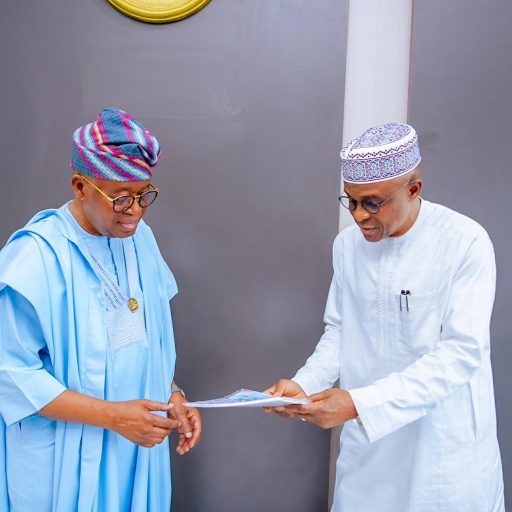
R-L Chairman Maritime Reporters Association of Nigeria MARAN Tunde Ayodele , speaker Dr Segun Musa Maritme Stakeholder, at the Roundtable Meeting at Maran Centre Lagos on Tuesday
Technology Cannot Replace Structural Reform
The maritime policy analyst argued that the central challenge facing the NSW initiative is not software integration but the operational readiness of the agencies expected to function within the new digital ecosystem.
He warned that without improvements in infrastructure, institutional coordination, and operational discipline, the platform risks becoming little more than a symbolic reform rather than a transformative one.
To illustrate his point, Musa drew parallels with a previous reform in the Nigeria Customs Service.
He recalled the 1997 transition from the Long Room clearance system to the Customs Processing Centre (CPC), which was widely celebrated at the time as a revolutionary upgrade.
Despite the optimism that surrounded the reform, Musa noted that the anticipated transformation in cargo clearance procedures did not fully materialise.
“Nigeria must avoid repeating that cycle where technological upgrades are introduced without fixing the structural inefficiencies that undermine them,” he said.
Customs Revenue Targets Under Scrutiny
Musa also criticised the long-standing practice of assigning revenue targets to Customs, arguing that such performance metrics undermine the agency’s core mandate.
According to him, Customs administrations globally are primarily designed to facilitate trade and ensure regulatory compliance, not to operate as revenue-maximising institutions.
Describing revenue-driven benchmarks as “a lazy way of running the economy,” he warned that celebrating rising Customs revenue could mask deeper distortions in the trade environment.
“If Customs is celebrating higher revenue every year, it may indicate inefficiencies within the system rather than genuine economic progress,” he said.
Beyond Digital Licences
While acknowledging recent automation initiatives within Customs, Musa maintained that digitising licences alone would not deliver the comprehensive reforms needed to modernise Nigeria’s ports.
Instead, he advocated a fully integrated end-to-end automation framework that connects all port stakeholders and eliminates manual interventions.
He also called for stronger inter-agency coordination, improved infrastructure, and a cultural shift within institutions responsible for trade facilitation.
Even as he commended the Comptroller-General of Customs for progress made in recent years, Musa emphasised that sustainable reform will require more than technological ambition.
For the National Single Window to succeed, he said, the government must prioritise infrastructure development, institutional accountability, and a policy framework that places trade efficiency above revenue optics.
Without those structural foundations, Musa warned, the NSW risks becoming another well-intentioned reform that fails to deliver the transformative impact Nigeria’s trade ecosystem urgently requires.













Leave a Reply