

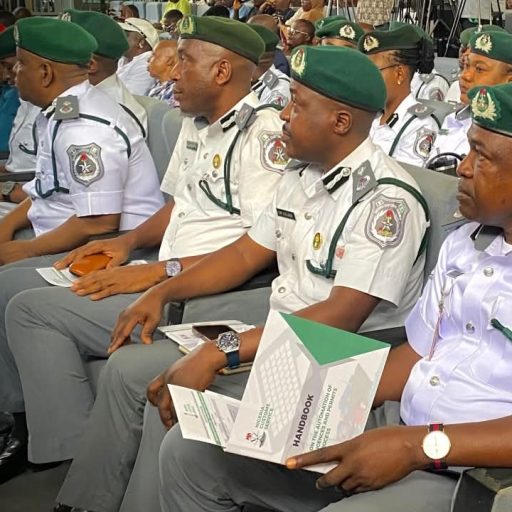
The Nigeria Customs Service (NCS) has intensified efforts to modernise cargo operations by deploying an automated licence and permit processing system for key stakeholders.
The initiative was highlighted during a stakeholder sensitisation programme held at Ikeja on Monday, 23 February 2025.
Representing the Deputy Comptroller-General of Customs in charge of Tariff & Trade, Caroline Niagwan, the Zonal Coordinator in charge of Zone ‘A’, Assistant Comptroller General (ACG) Muhammad Babandede, described the rollout as a significant step toward more efficient service delivery.
ACG Babandede explained that the reform is designed to eliminate long-standing bottlenecks associated with manual documentation and processing.

“This CGC’s initiative is a direct response to the long-standing need to make our processes faster, more transparent and easier for the people we serve,” he said. “For many years, stakeholders have had to contend with paperwork, long queues and the uncertainty that comes with manual processing. Those days are coming to an end,” he further added.
He disclosed that the sensitisation programme would be extended across all Customs zones to ensure stakeholders fully understand and adopt the new automated platform.
According to him, the digital transition will strengthen record-keeping and supervision within the Service while reducing officers’ workload and improving overall operational efficiency.
Also speaking, the Comptroller, Licence & Permit Unit, Tariff & Trade Department, Ngozika Anozie, said the automation drive reflects the Service’s commitment to aligning with global best practices. “With this innovation, the ease of doing business in the maritime sector will improve and translate into increased revenue generation for the nation.”
Stakeholders at the engagement commended the Service for the reform initiative aimed at optimising trade processes. They expressed optimism that the automated system would eliminate persistent bottlenecks and further enhance trade facilitation across Nigeria’s ports.











Leave a Reply