

By Amina Ojelabi
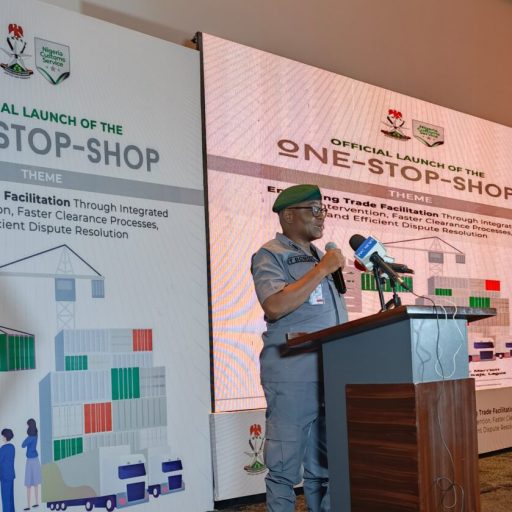
The Nigeria Customs Service (NCS) has formally launched a One-Stop-Shop (OSS) platform aimed at accelerating cargo clearance and eliminating bureaucratic bottlenecks, with a firm commitment to achieving full paperless operations by the second quarter of 2026.
The announcement was made on Friday in Lagos during the official unveiling of the OSS under the theme, “Enhancing Trade Facilitation Through Integrated Risk Intervention, Faster Clearance Process and Efficient Dispute Resolution.”
Comptroller-General of Customs, Bashir Adewale Adeniyi, described the platform as a strategic continuation of the Service’s trust-based engagement with stakeholders and a critical pillar of Nigeria’s broader digital transformation drive. Represented at the event by Deputy Comptroller-General of Enforcement, Timi Bomodi, Adeniyi said the initiative aligns with the administration of President Bola Ahmed Tinubu in promoting transparent, predictable and accountable border processes.
Tackling Systemic Bottlenecks
According to the Customs boss, delays at Nigerian ports are often less about inspection timelines and more about fragmented procedures, duplicated checks and idle waiting periods.
Findings from Nigeria’s Trade Policy Review at the World Trade Organization (WTO), alongside the Service’s Time Release Study and national assessments, have consistently identified these inefficiencies as drivers of high trade costs and declining investor confidence.
The OSS seeks to centralise valuation processes, intelligence and enforcement activities, compliance monitoring, processing centres and gate operations into a unified workflow. Through digital tracking systems, automated alerts, joint inspections and shared dashboards, the platform replaces multiple checkpoints with a single coordinated decision space.
“Multiple checkpoints are collapsed into one decision space, with interventions that are collective, fully auditable and aligned with institutional responsibility,” Adeniyi stated.
48-Hour Clearance Target
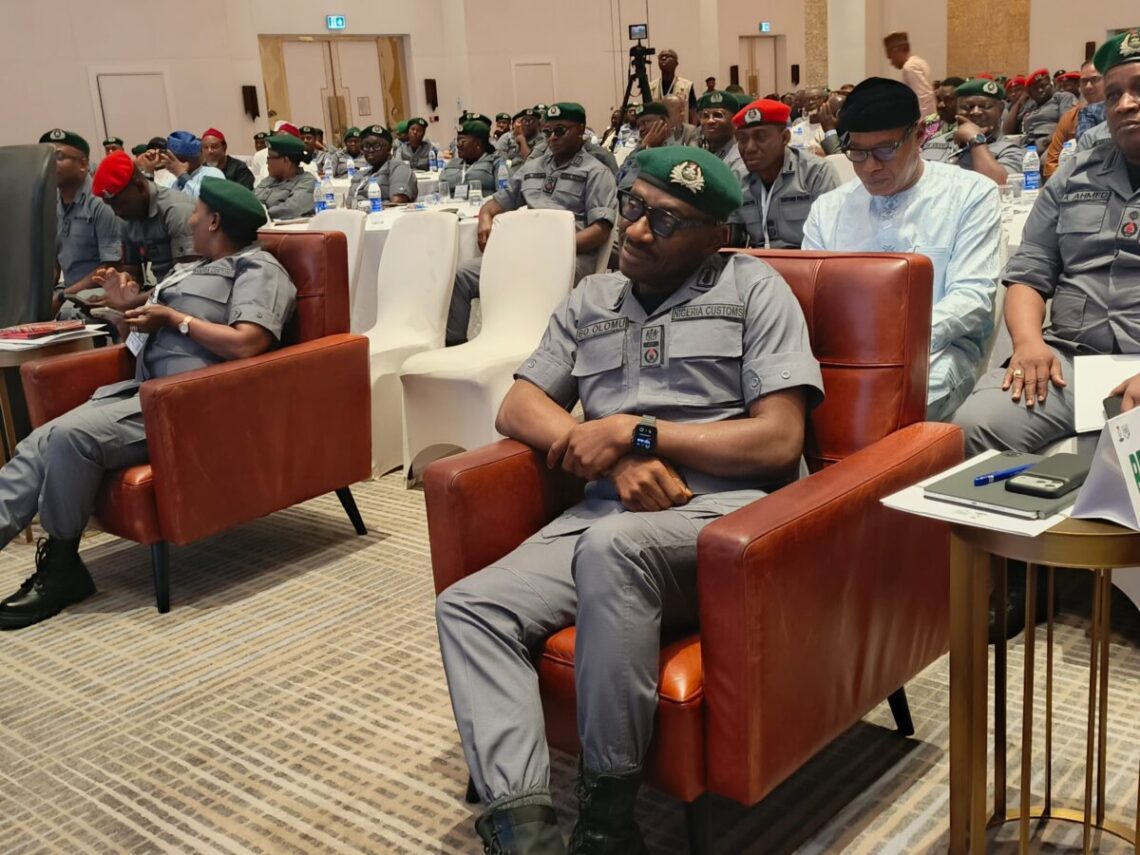
The Service has set an ambitious 48-hour clearance window for cargo under the new system, alongside reduced compliance costs, stronger revenue assurance and enhanced transparency.
The broader paperless initiative—covering core clearance, documentation and approvals—is scheduled for rollout by the end of Q2 2026. Adeniyi noted that reduced physical interfaces will not only improve processing speed but also strengthen audit controls.
He reaffirmed Customs’ commitment to inter-agency collaboration under the “One Government” directive and expressed support for the National Single Window project, which is expected to complement the OSS by deepening coordination across Nigeria’s border management ecosystem.
Stakeholders Applaud Reform
Deputy Comptroller-General in charge of Tariff and Trade, Caroline Kemen Niagwan, disclosed that OSS adoption began in 2018 but faced implementation hurdles, largely due to communication gaps. She explained that the upgraded digital interface now consolidates all risk interventions into a single operational framework.
“The platform eliminates procedural complications and significantly improves clearance efficiency,” she said, urging officers nationwide to take ownership of the reform process.
Industry stakeholders welcomed the initiative. The Manufacturers Association of Nigeria (MAN), represented by Director-General Segun Oshidipe, described the OSS as a decisive step toward easing the cost of doing business in Nigeria. He praised Customs for creating an open forum that encourages collaboration, transparency and practical problem-solving.
Similarly, the Association of Nigerian Licensed Customs Agents (ANLCA) President, Emenike Nwokeoji, expressed strong support for the reform.
“We have been eager to see this and we are in full support. We believe that implementation of the One-Stop-Shop will reduce human contact at the port,” he said.
A Digital Shift for Trade Competitiveness
As Nigeria pushes to strengthen its global trade competitiveness, the OSS and the transition to paperless operations represent a decisive shift toward efficiency, transparency and institutional accountability.
If effectively implemented, the platform could redefine cargo clearance procedures, lower trade costs and reinforce investor confidence—placing Nigeria on a stronger footing within the global trading system.








Leave a Reply