


By Amina Ojelabi
President of the African Shipowners Association of Nigeria (ASAN), Capt. Ladi Olubowale, has issued a strong call for sweeping reforms across Nigeria’s maritime governance structure, warning that fake certifications, unchecked crew misconduct and weak accountability mechanisms are undermining national security, industry professionalism and investor confidence.
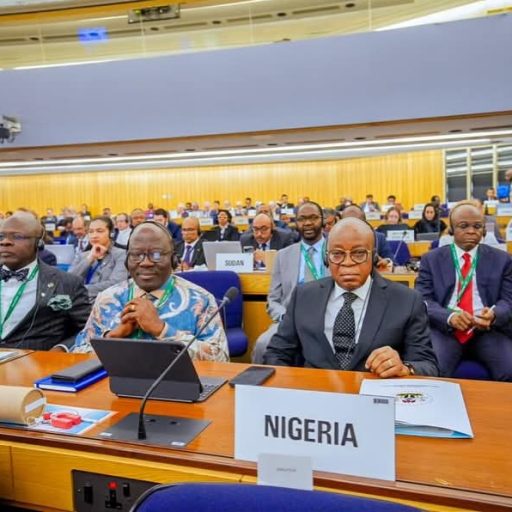
Speaking at the 2025 Nigerian Maritime Expo (NIMAREX), Olubowale said the sector is at a critical turning point and must embrace digital verification systems, stronger public–private partnerships and deliberate reforms to reposition Nigeria as a credible global maritime hub.
He raised concerns over the proliferation of forged certificates, noting that Nigeria’s current verification process is too porous and vulnerable to manipulation. He proposed the creation of a secure, government-owned digital portal where all competency certificates issued to masters and officers local or foreign would be uploaded for public verification.
“Today anyone can walk into Oluwole and print a certificate, and there is no credible process to verify it,” he said. “Every certificate should be accessible on a maritime administration portal. If an employer wants to verify, they log in, pay a fee and confirm. That is the global standard.”
Olubowale also expressed alarm over repeated cases of crew and captains stealing products at sea, often without facing any penalties. He described a cycle where offenders are simply dismissed and move on to new vessels to repeat the same criminal acts.
“A master steals product today and gets fired. Tomorrow, he joins another vessel and does the same thing. There is no reporting structure, no penalty, no trace,” he lamented.
To curb this, he called for a national mariner misconduct database, enabling authorities to blacklist offenders and prevent them from being rehired without scrutiny. “If a mariner commits a criminal act, it must be reported and logged. Employers should see that record before making hiring decisions,” he said.
On industry collaboration, Olubowale cautioned that stakeholders must move beyond rhetoric and adopt structured, measurable approaches. “The word collaboration is big, but we must define what exactly we are collaborating on,” he noted. “Associations must ask themselves: what impact are we making each year?”
He added that real reform would only take root when industry players take ownership of the sector’s challenges rather than waiting for external intervention. “Nobody will drive this industry for us. Until stakeholders collectively own the problems and model solutions every month, we will not move forward.”
Olubowale emphasized that Nigeria’s maritime future hinges on robust public–private partnerships, alignment of blue economy policies with regulatory frameworks, and modernization of port infrastructure. He encouraged young maritime professionals to leverage technology to develop verification systems, vessel-tracking tools and other digital solutions.
Closing his remarks, he stressed the need to move from dialogue to implementation. “We have spent years talking and pointing fingers. It is time to be intentional about changing this industry. The maritime sector belongs to all of us no one will fix it for us.”
Combined with his earlier advocacy for deeper regional trade integration and policy reforms, Capt. Olubowale’s expanded address outlines a bold roadmap for transforming Nigeria into a transparent, secure and globally competitive maritime nation.







Leave a Reply